Engineering & Robotics
DESN1000 Underwater ROV
A first-year design project to build an underwater ROV that could retrieve and move a PVC "nuclear fuel rod" from the pool floor.
Overview
For DESN1000, my first-year engineering design course, we built an underwater ROV for a pool-floor retrieval challenge. The task was to collect and move a PVC pipe framed as a "nuclear fuel rod." I led the CAD and machining for the ROV parts, turning the concept into a CNC-machined aluminium frame, ballast structure, propulsion layout, and later a dedicated intake mechanism.
My Role
- Created the ROV CAD and mechanical layout
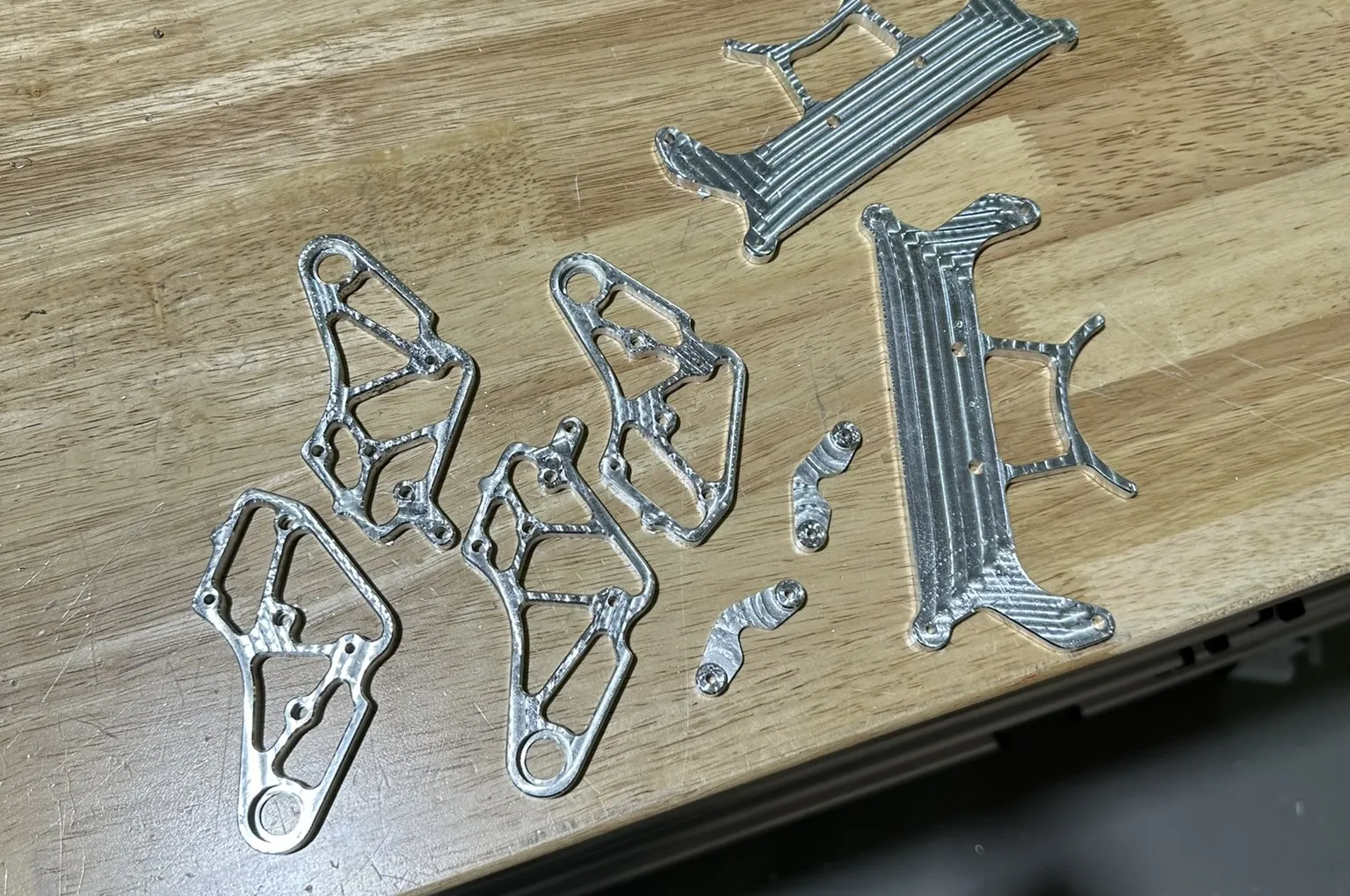
- Machined the frame, keel plate, intake plates, and supporting mechanical parts
- Designed around stability, self-righting behavior, propulsion, and fuel-rod retrieval
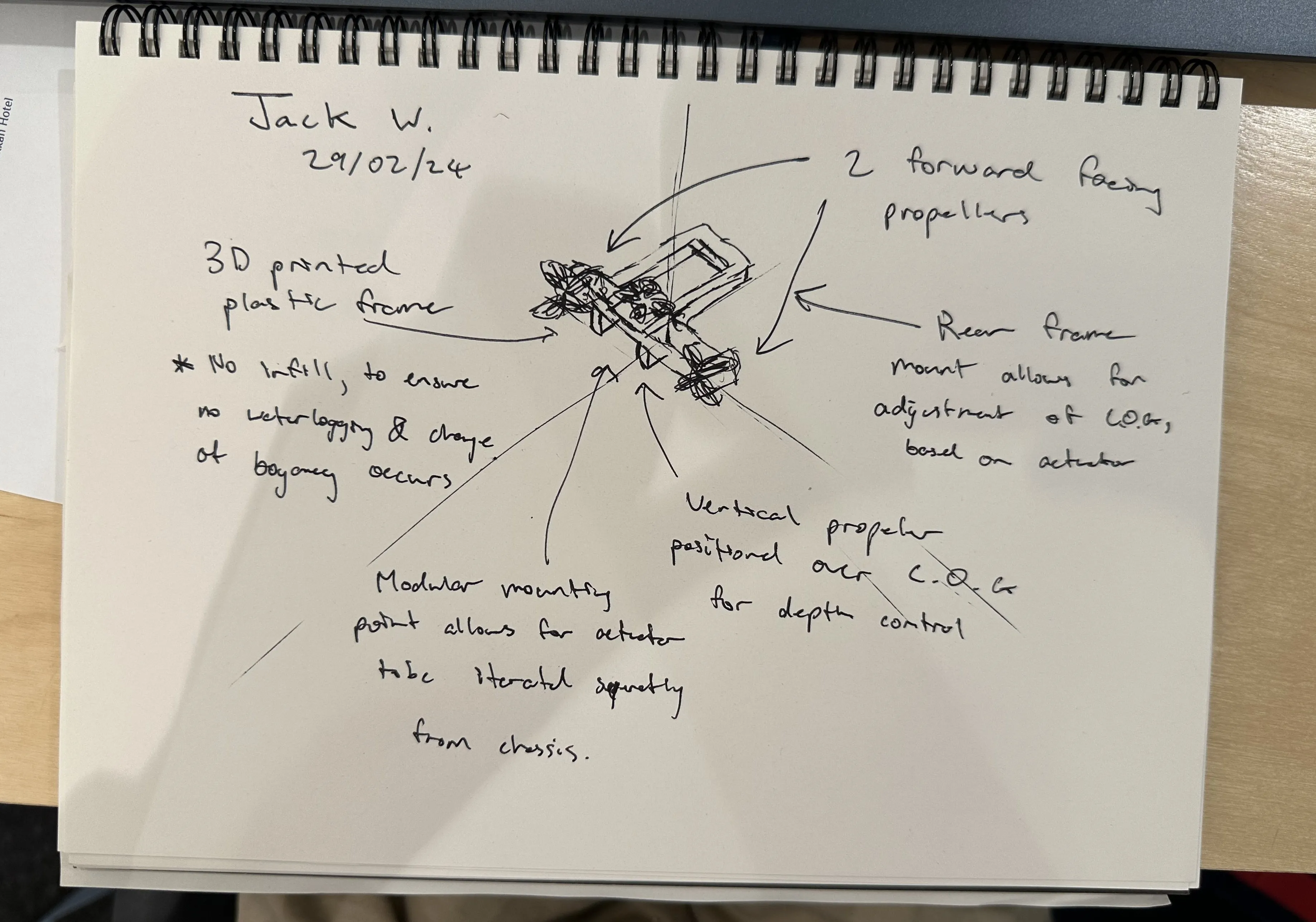
Sketch and first frame mockup
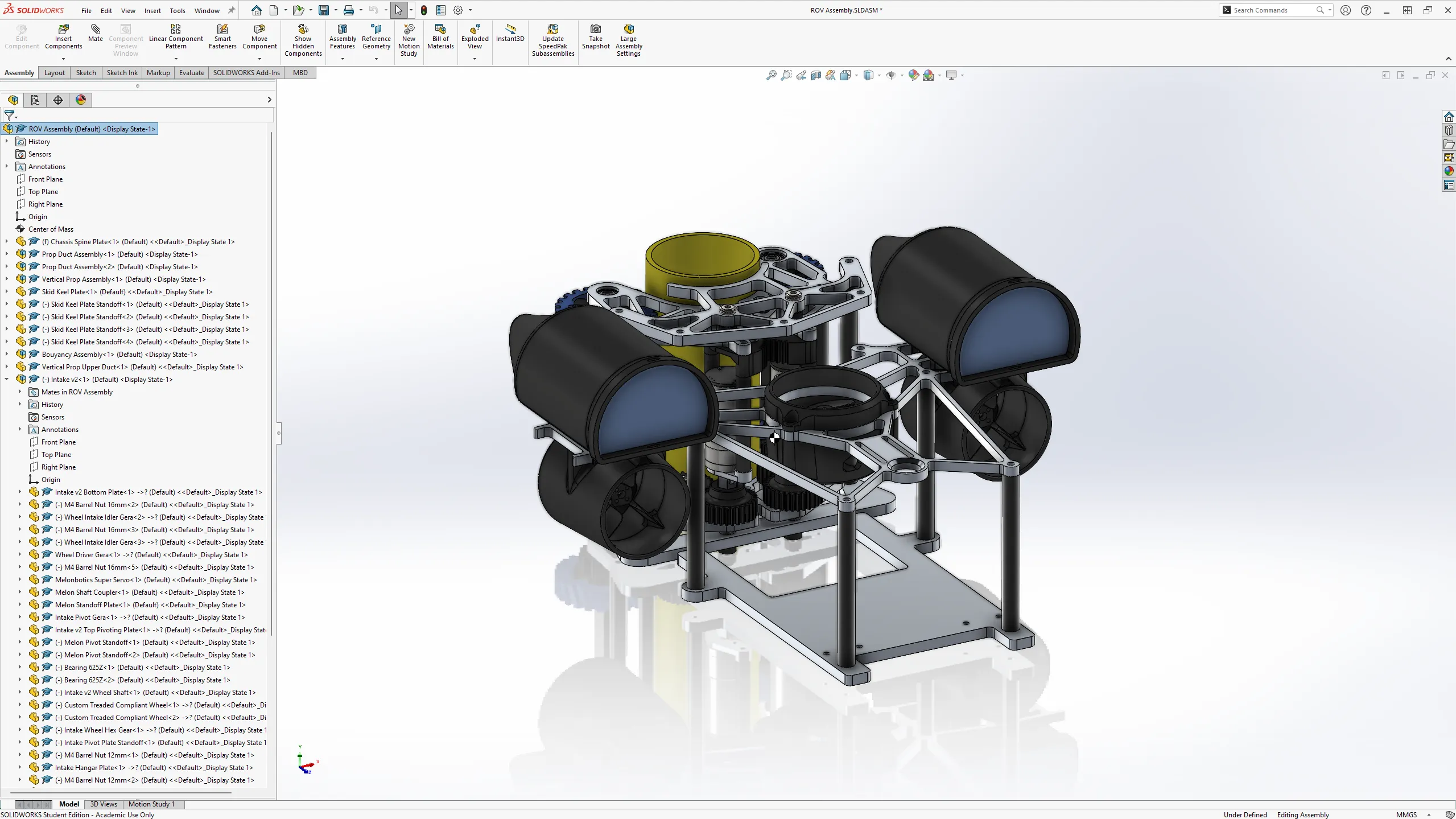
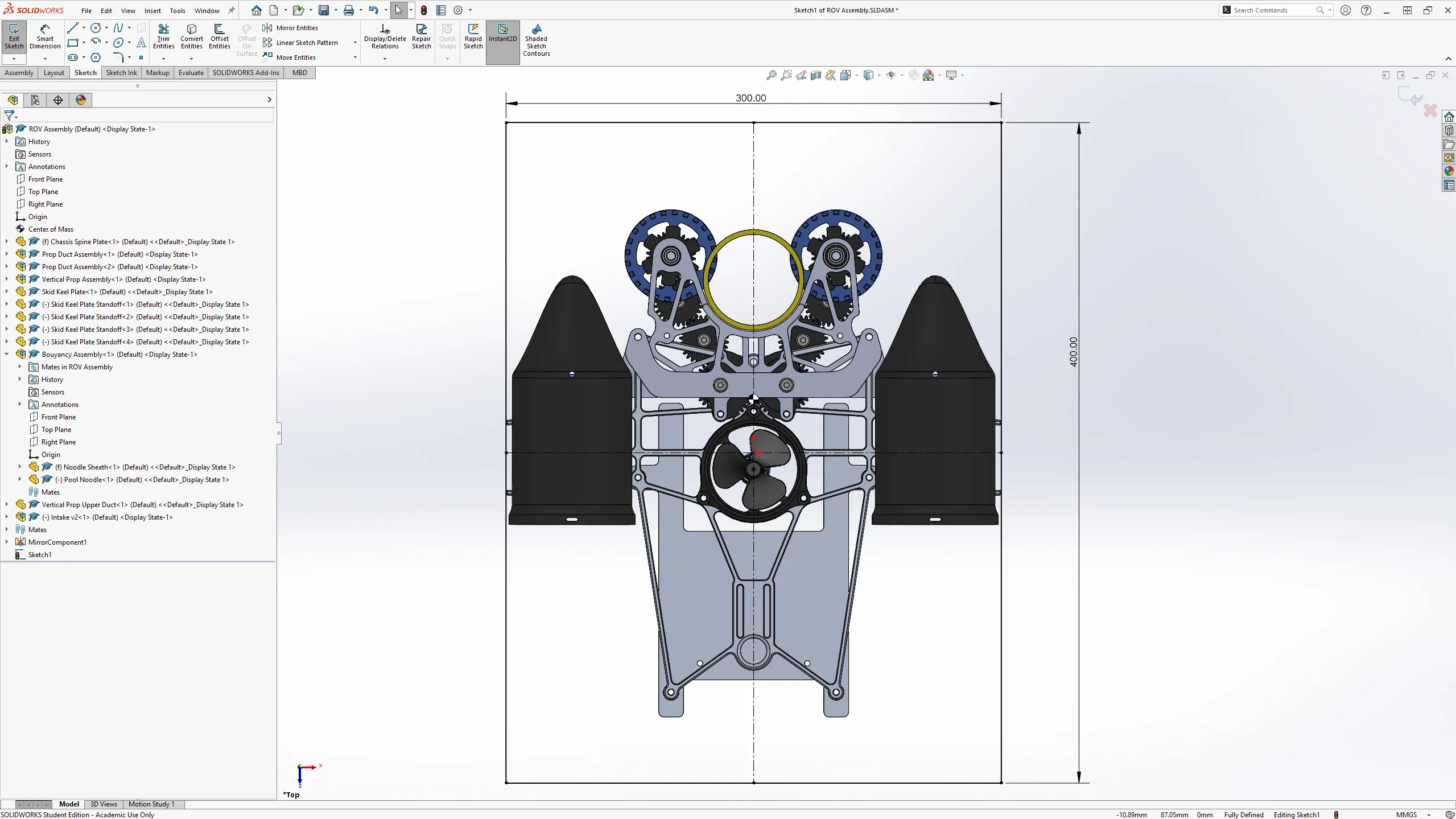
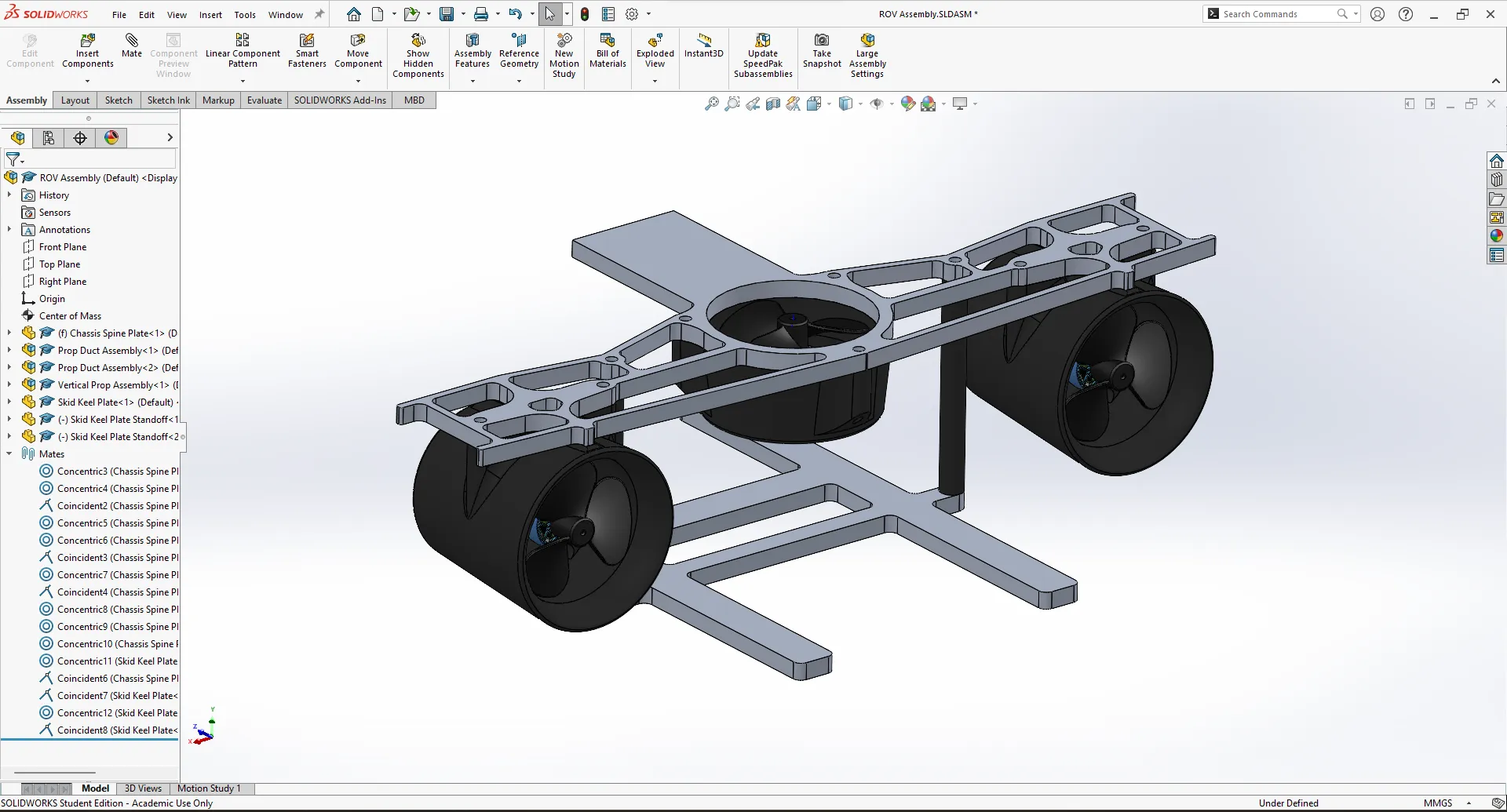
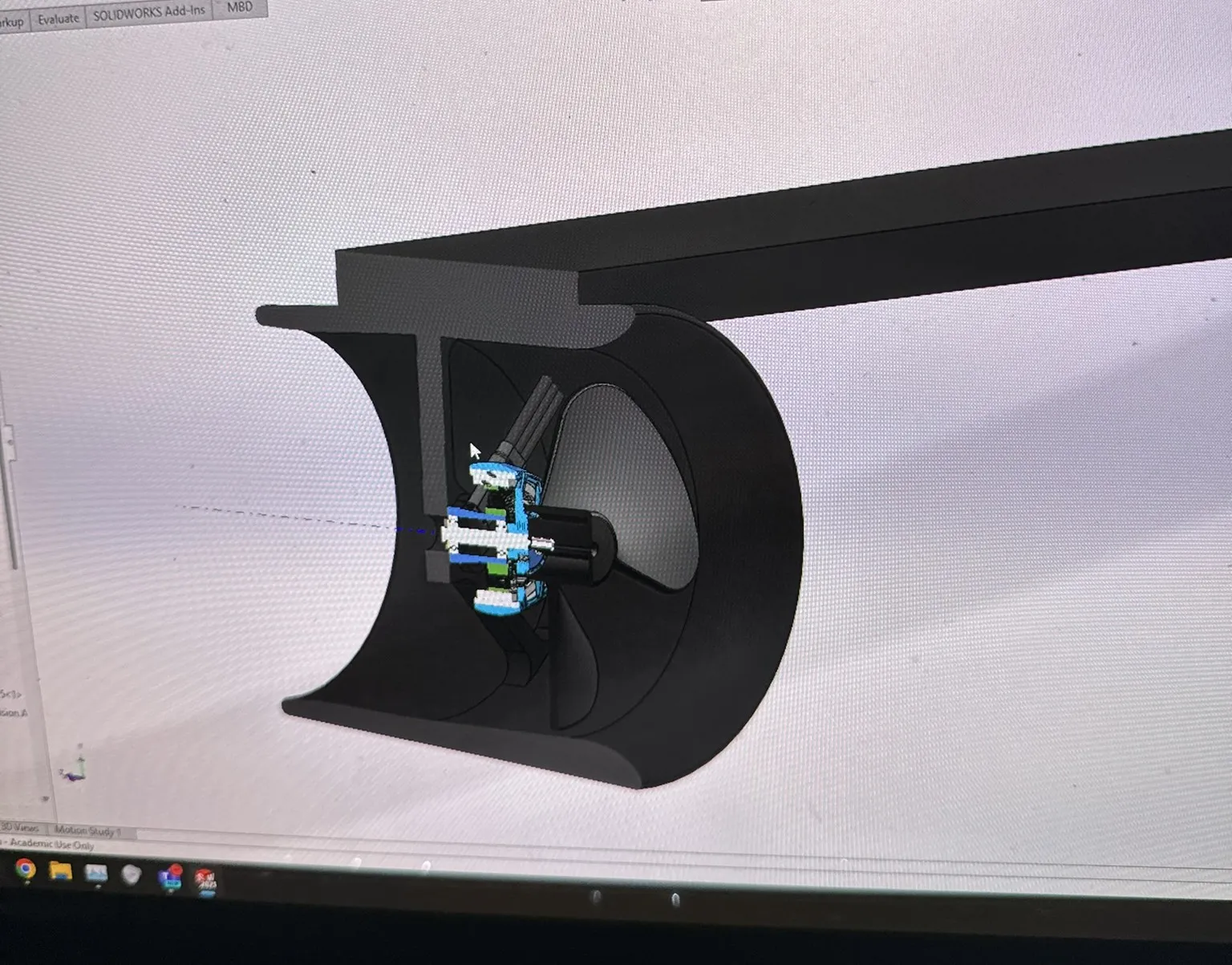
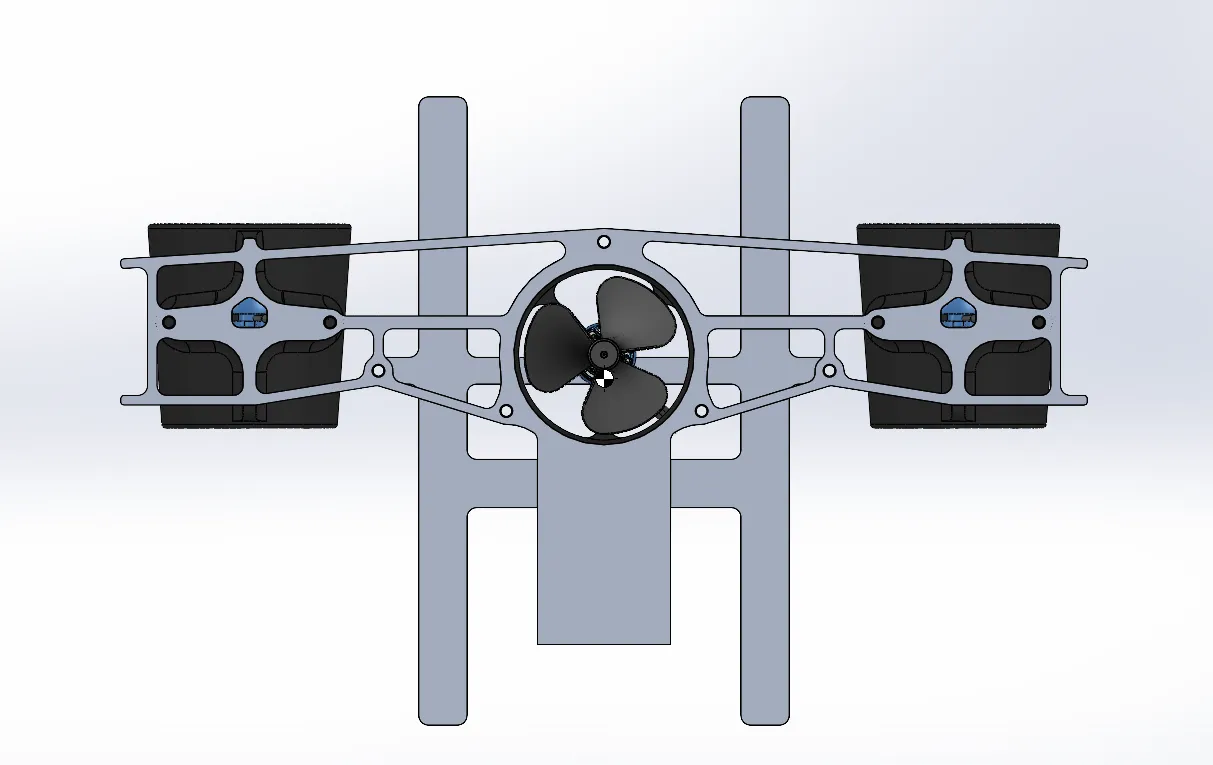
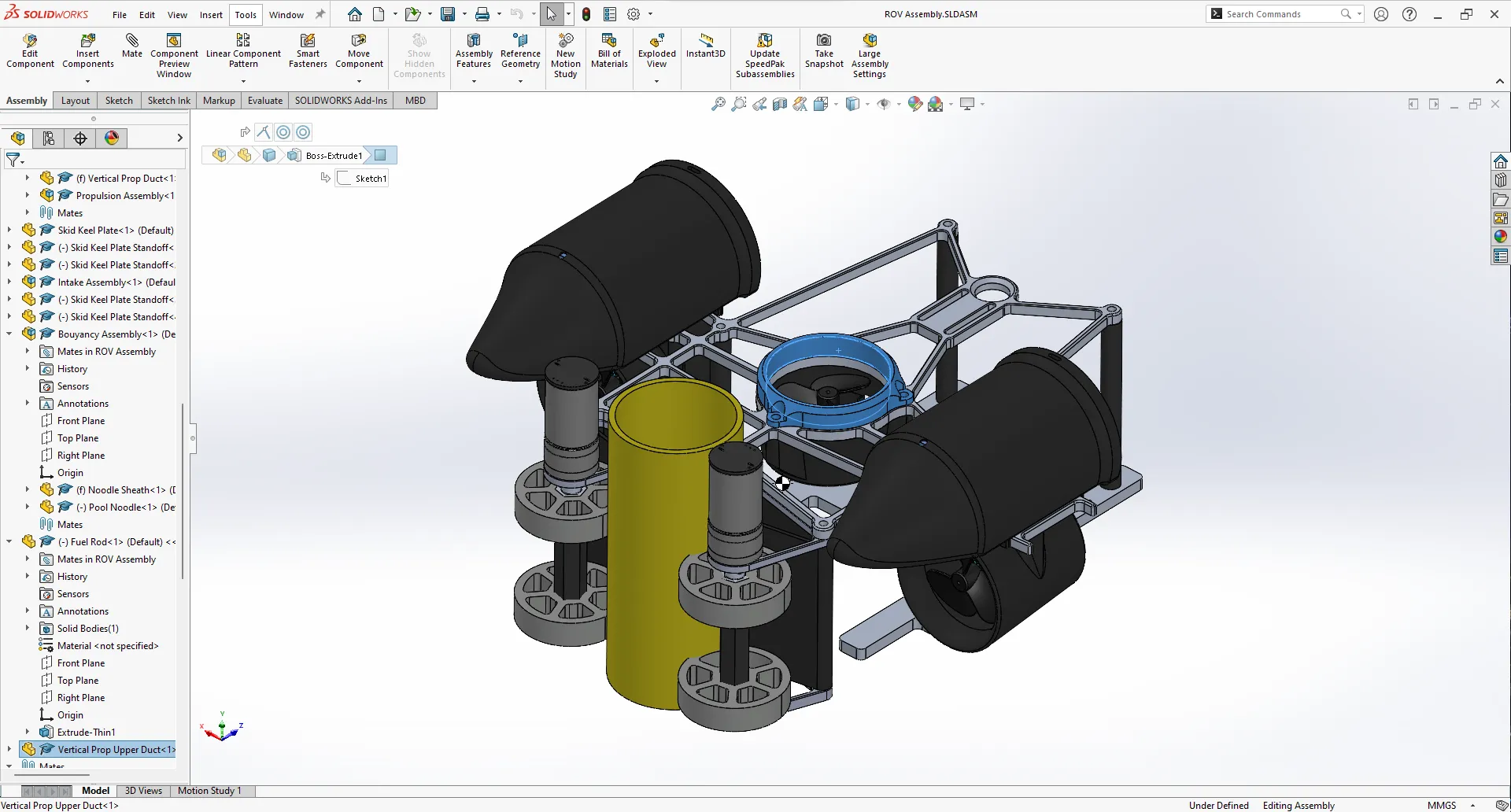
The early concept established the main architecture: a flat upper frame, two forward thrusters, a vertical thruster for depth control, and a ballast keel plate below the chassis. Keeping mass low gave the ROV a low centre of gravity, helping it self-right in pitch and roll.
- Started from a hand sketch that called out propulsion, modular mounting, and center-of-gravity adjustment
- Moved quickly into a CAD mockup to package the thrusters and keel structure
- Used the keel plate as both ballast and a stability feature
V1 frame, machining, and testing
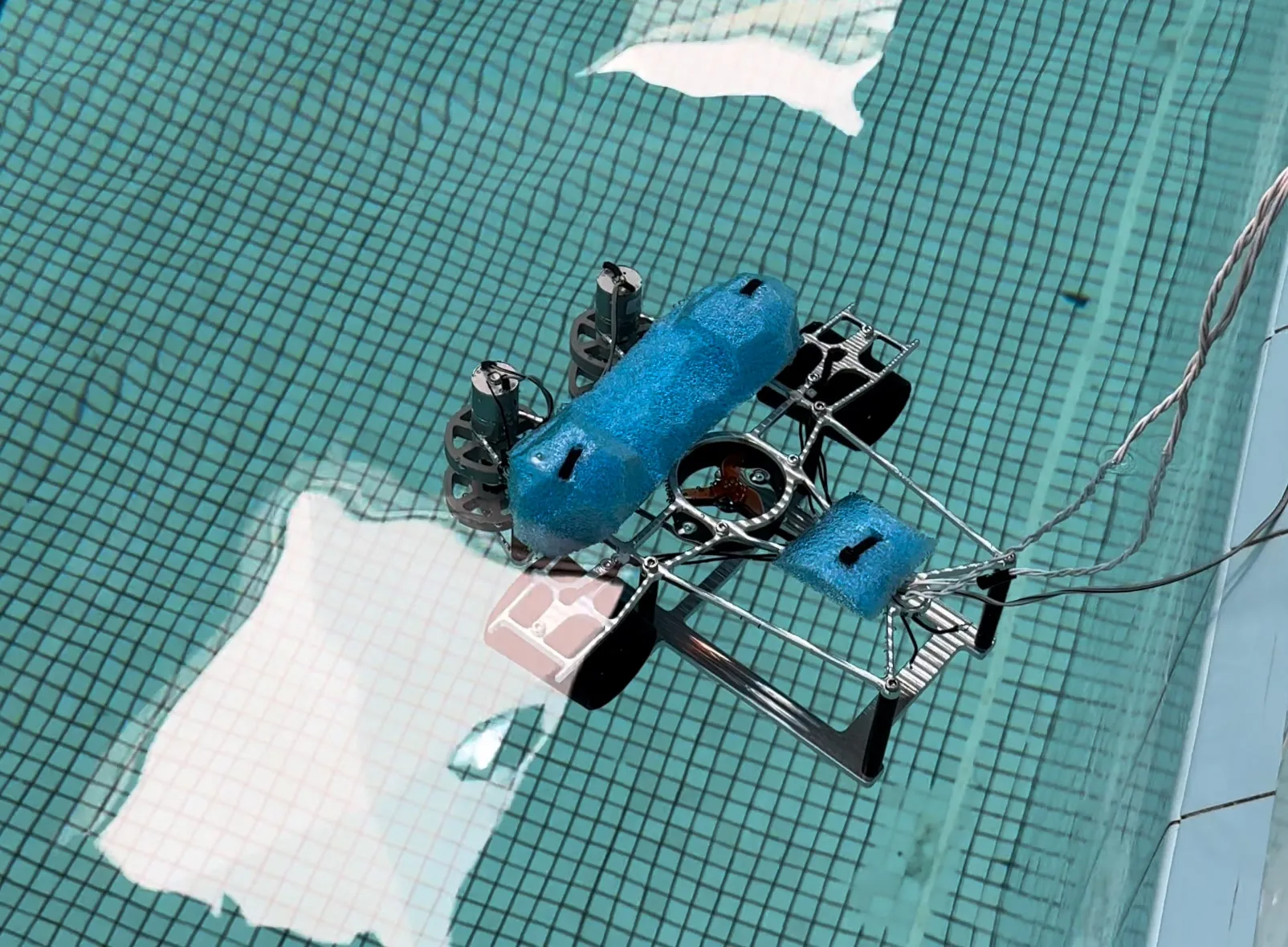
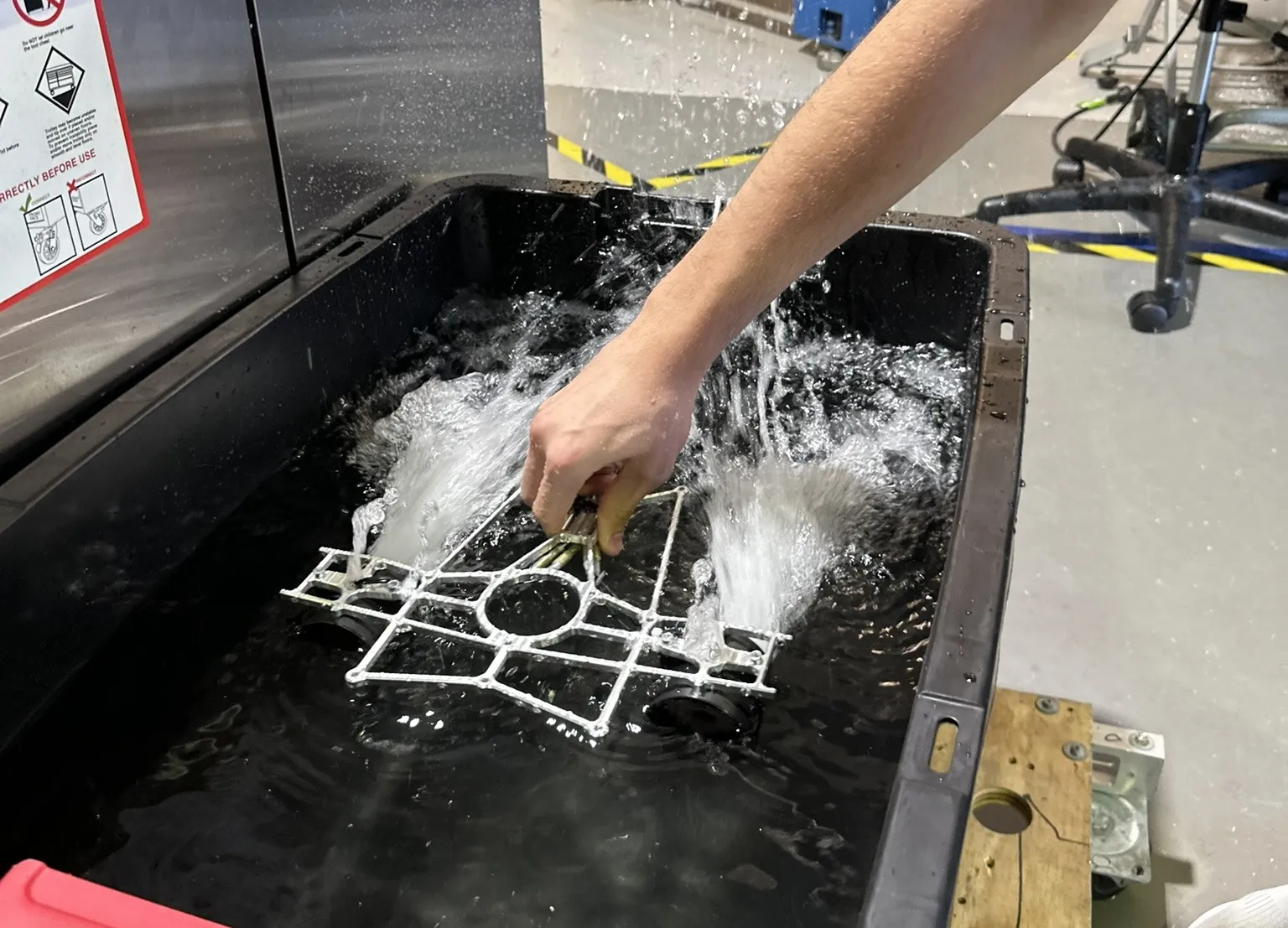
The first physical ROV translated the frame into machined aluminium plates with a tethered control setup, ballast below the chassis, and pool-tested buoyancy. This stage proved the basic chassis, propulsion arrangement, and self-righting stability before the intake became the focus.
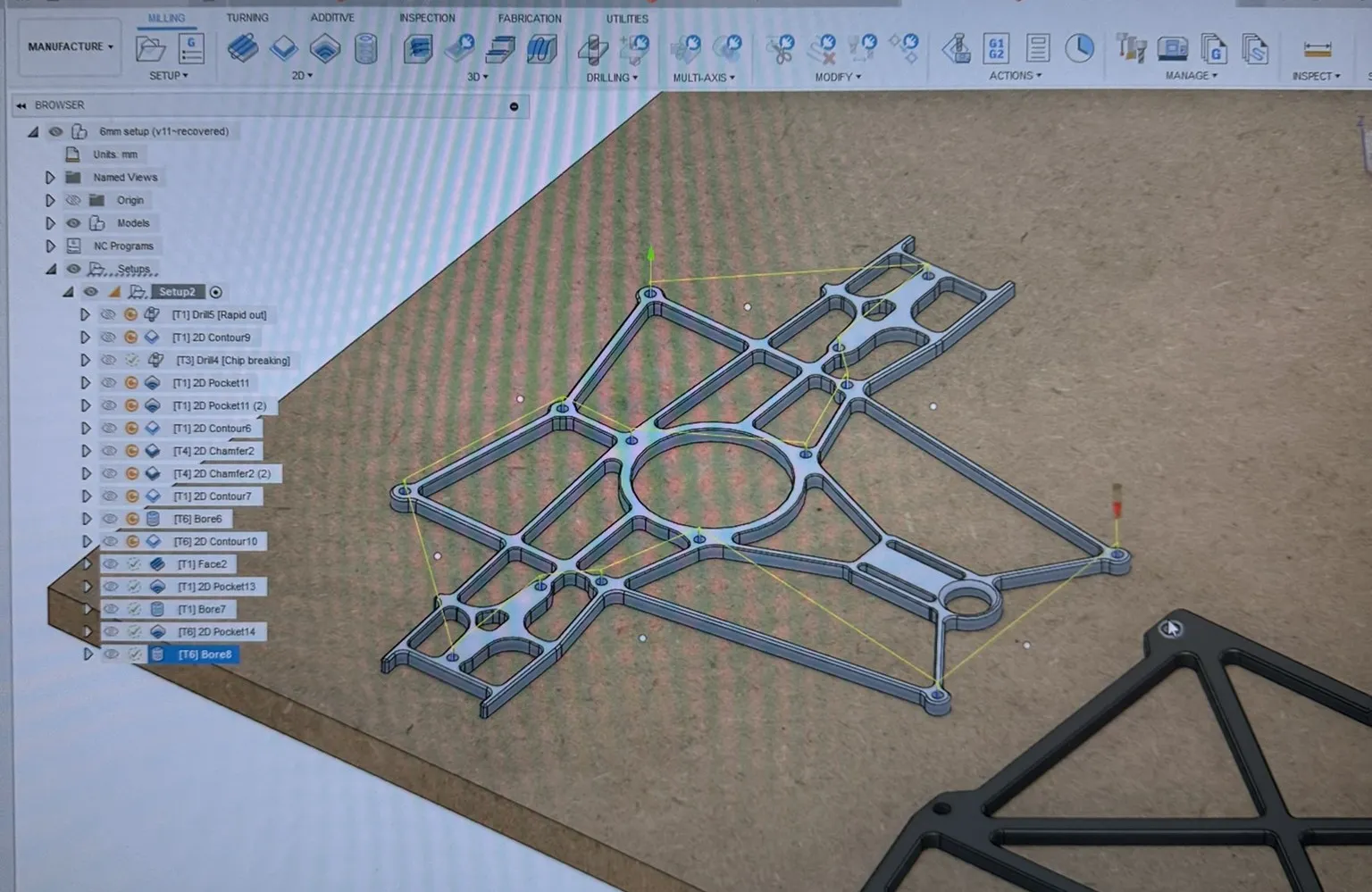
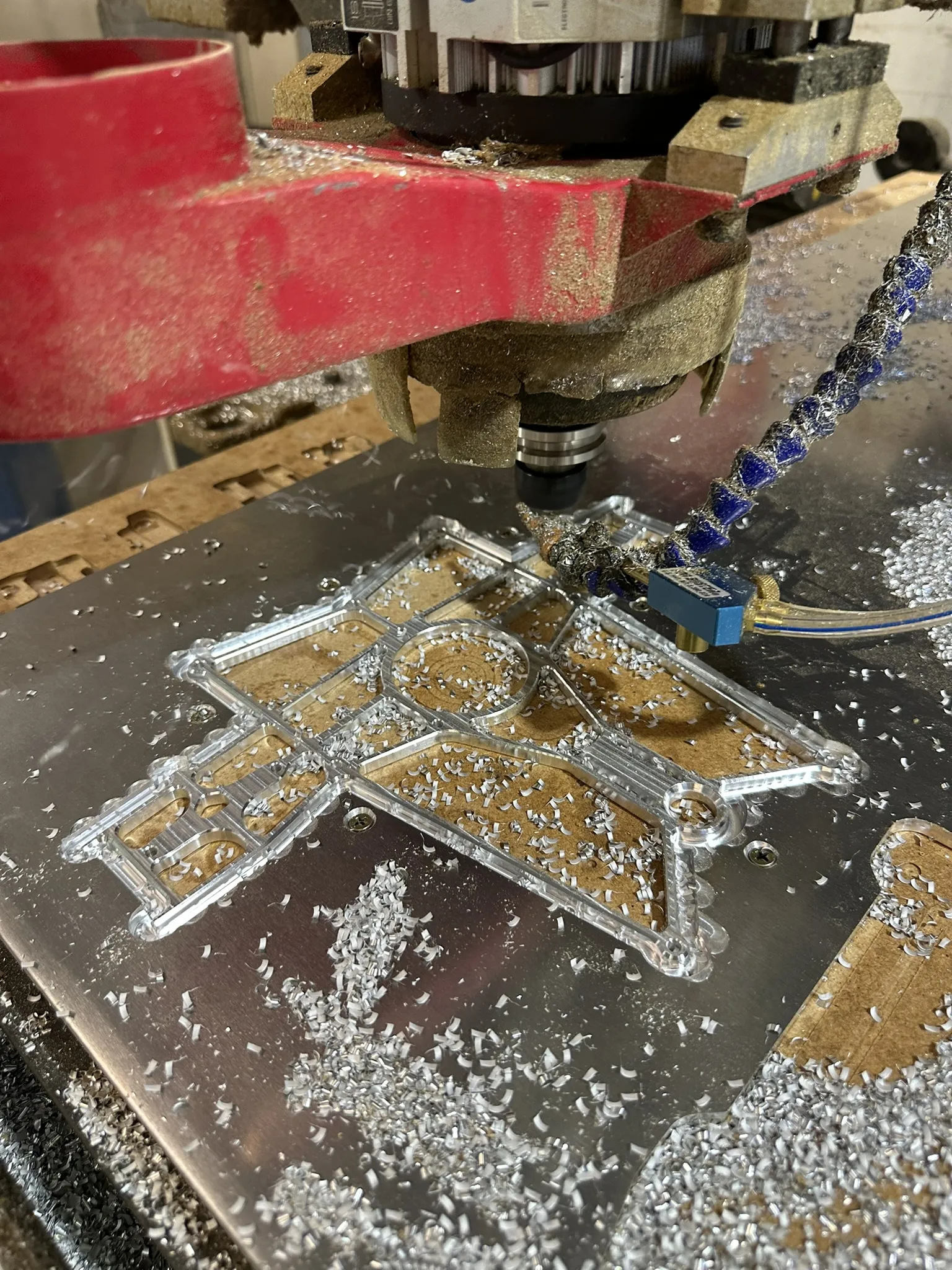
- Programmed CAM and machined the frame plates from aluminium
- Integrated the horizontal and vertical thrusters into the machined structure
- Tested thrust, buoyancy, and stability in a tub and then in the pool
Buoyancy and propulsion tuning
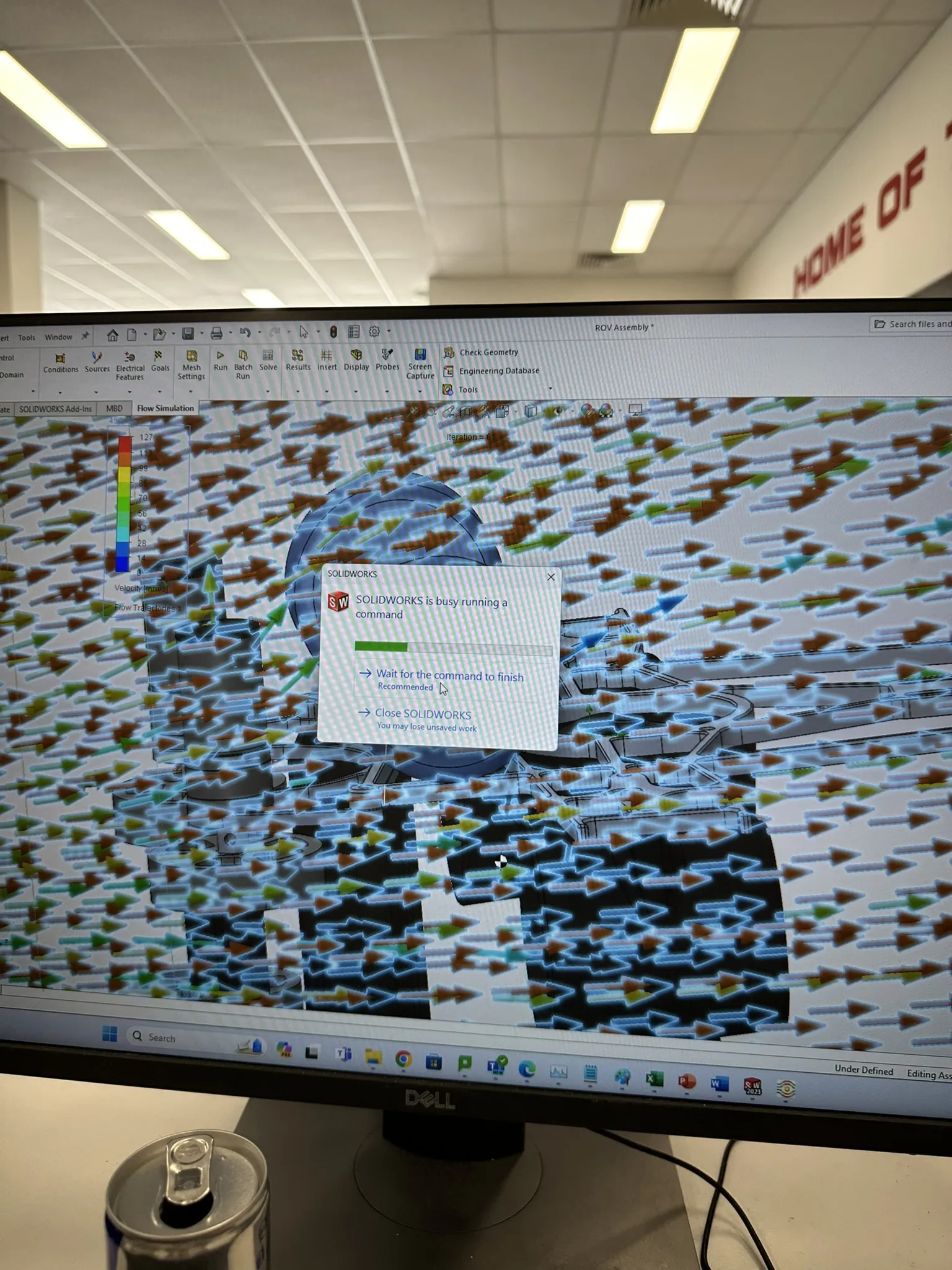
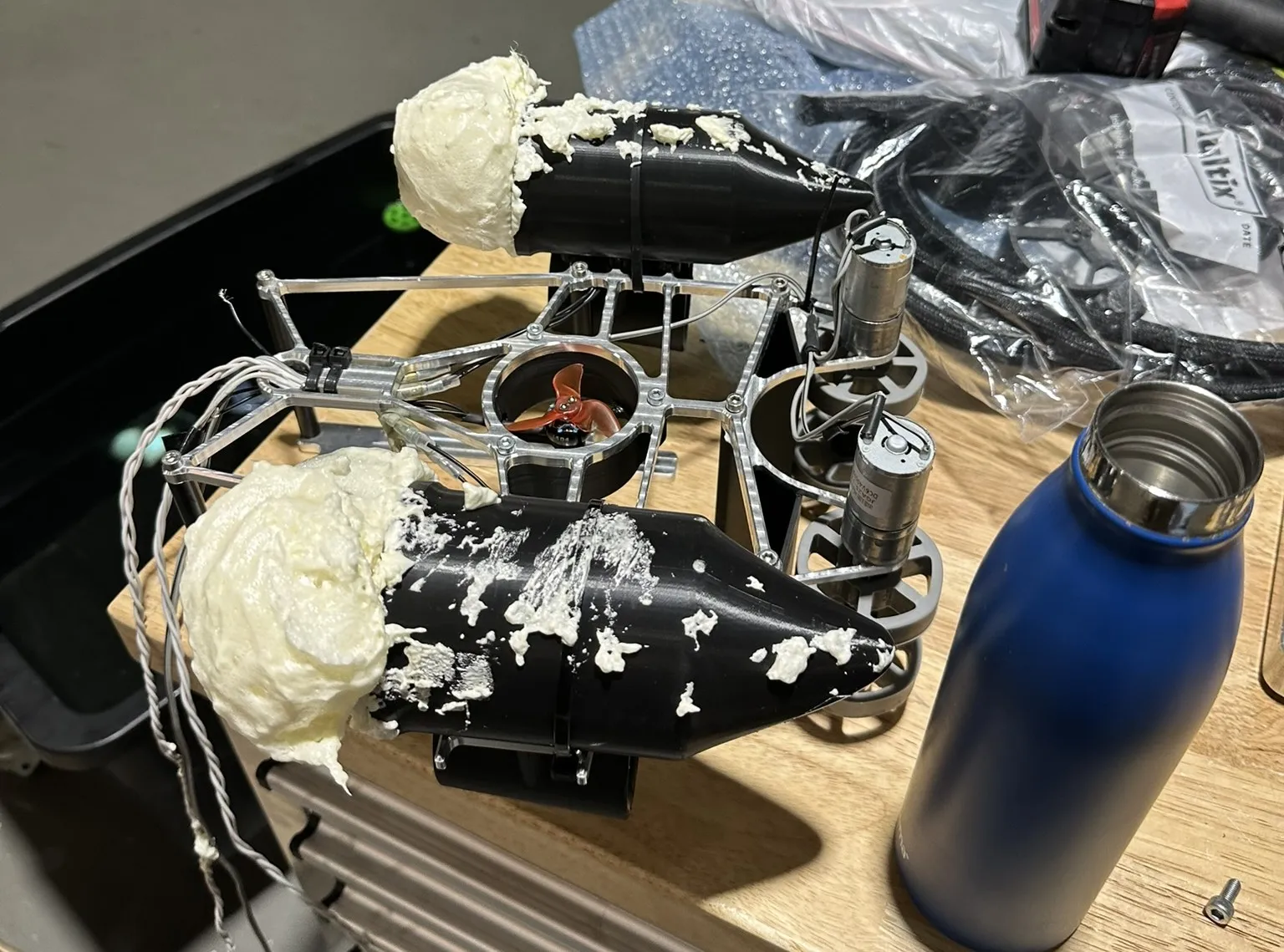
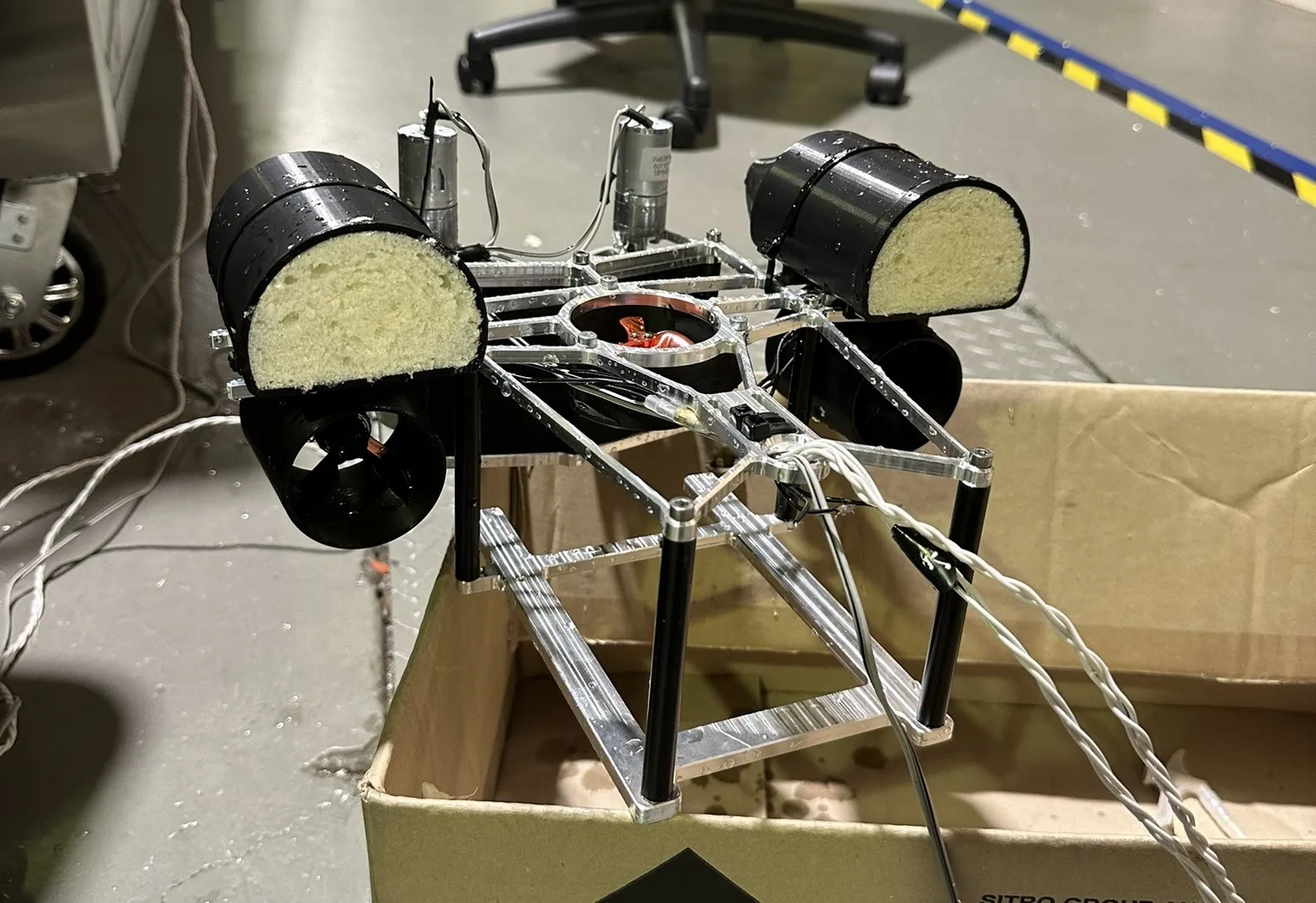
After the first pool tests, we had a more accurate idea of how much bouyancy we needed. I measured the volume of the trimmed noodles from the first test and then designed 'Shinkansen' style shrouds, to be filled with expanding PU foam. Some experimentation was also conducted in Solidworks Flow Simulation, though it did not lead to much actionable insight.
- Used pool testing to adjust trim and buoyancy placement
- Conversion to 'Shinkansen' aerodynamic fairing
- Refined the body around the machined frame instead of starting from scratch
Fuel rod intake mechanism
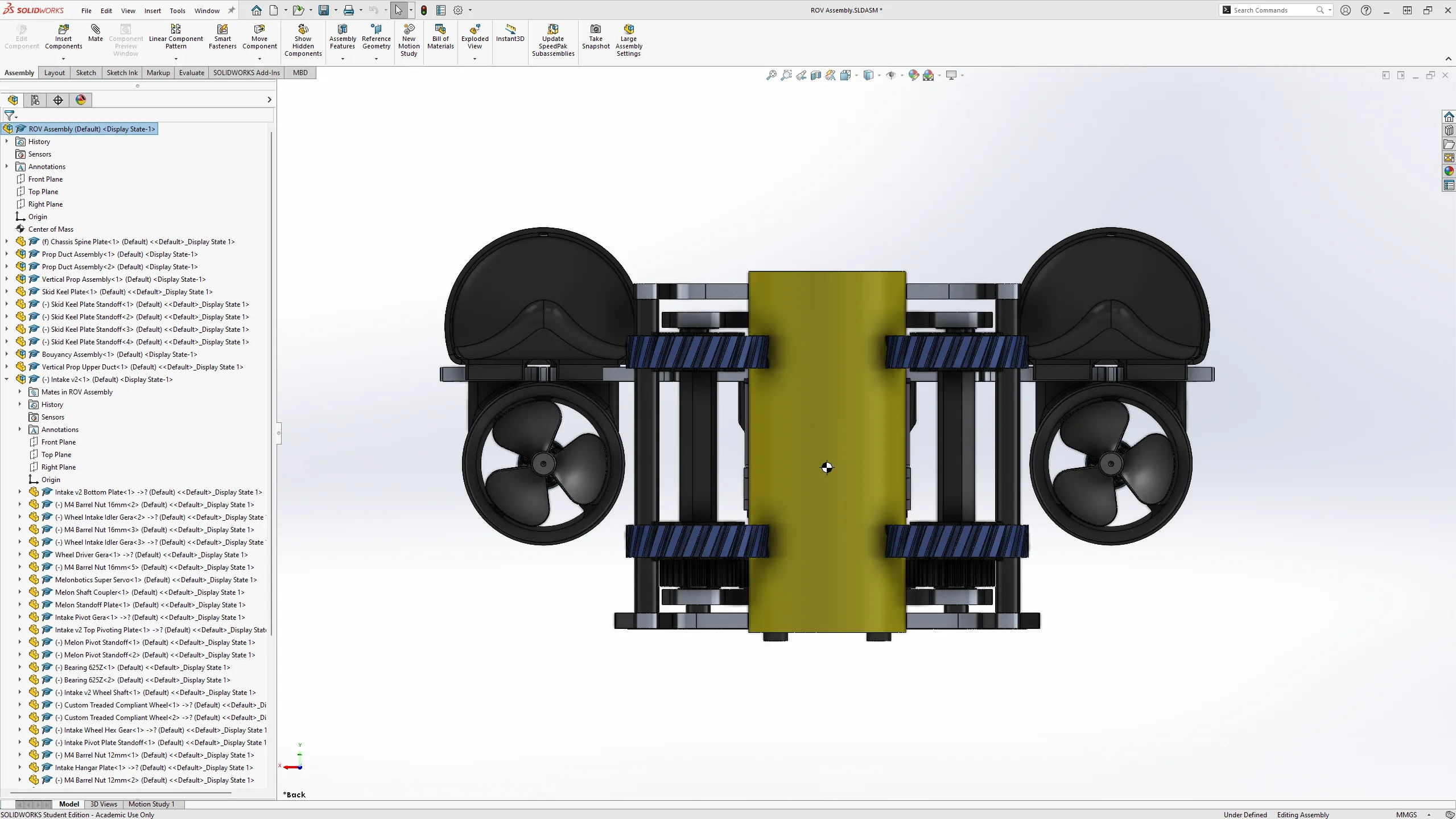
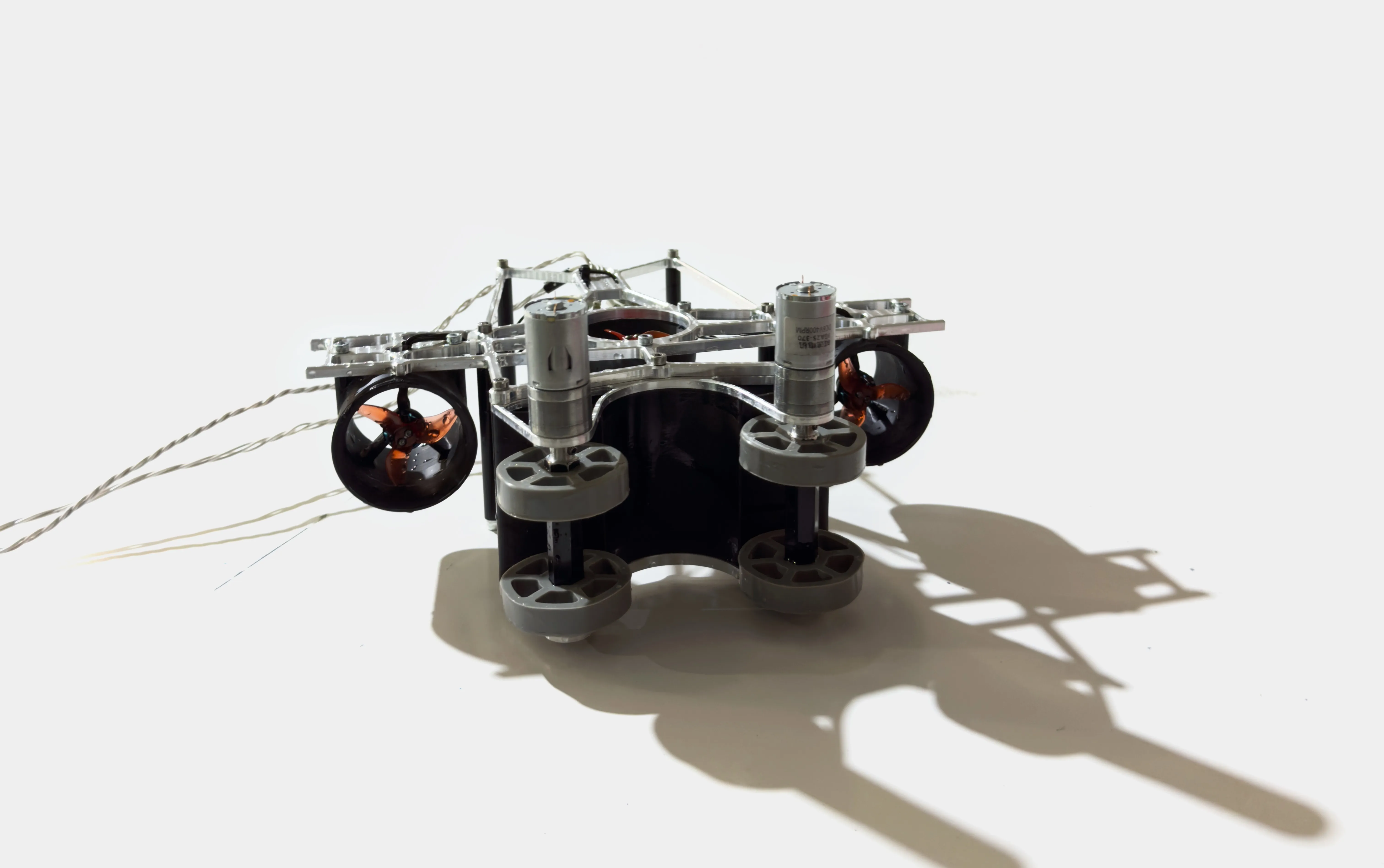
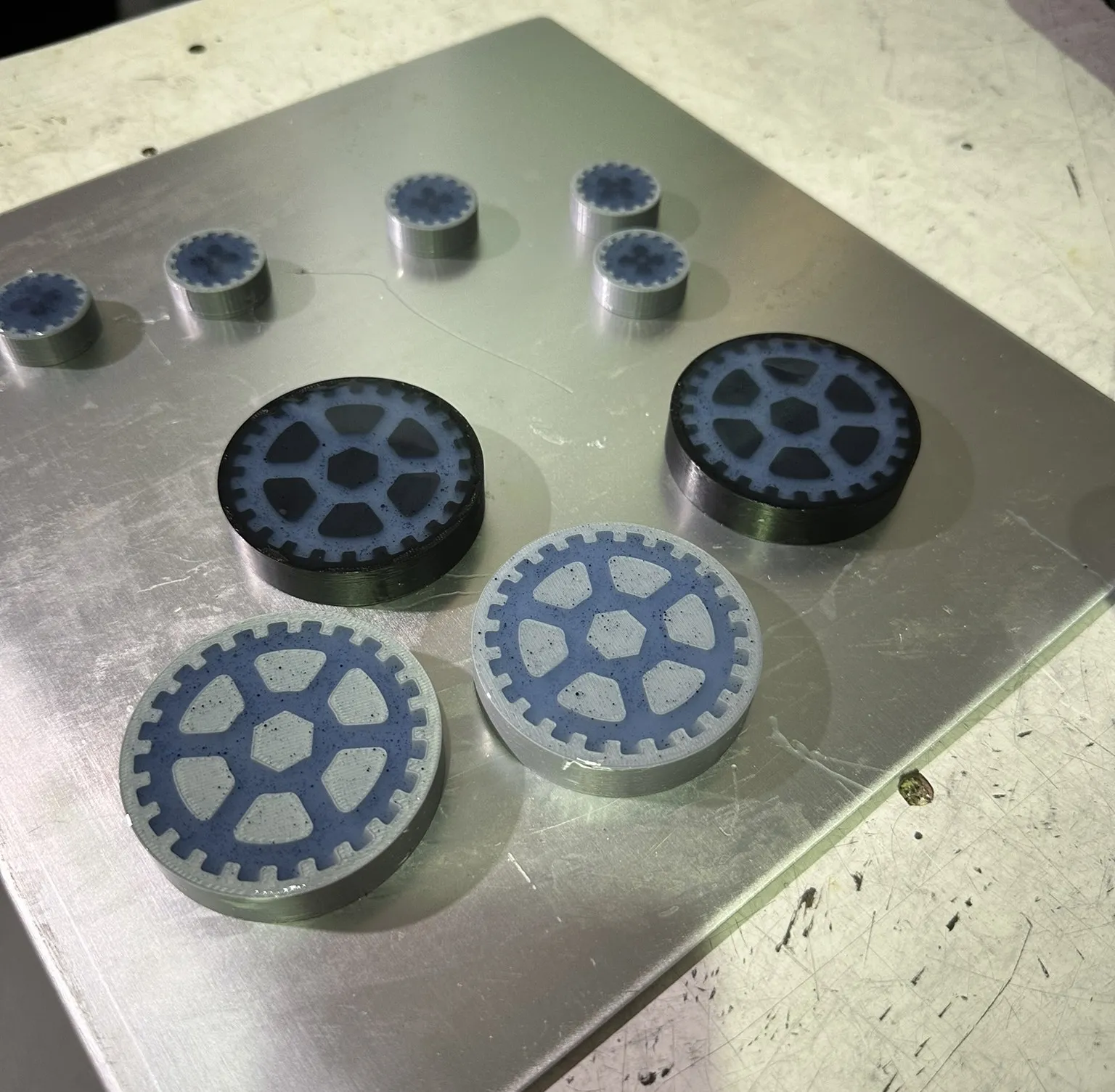
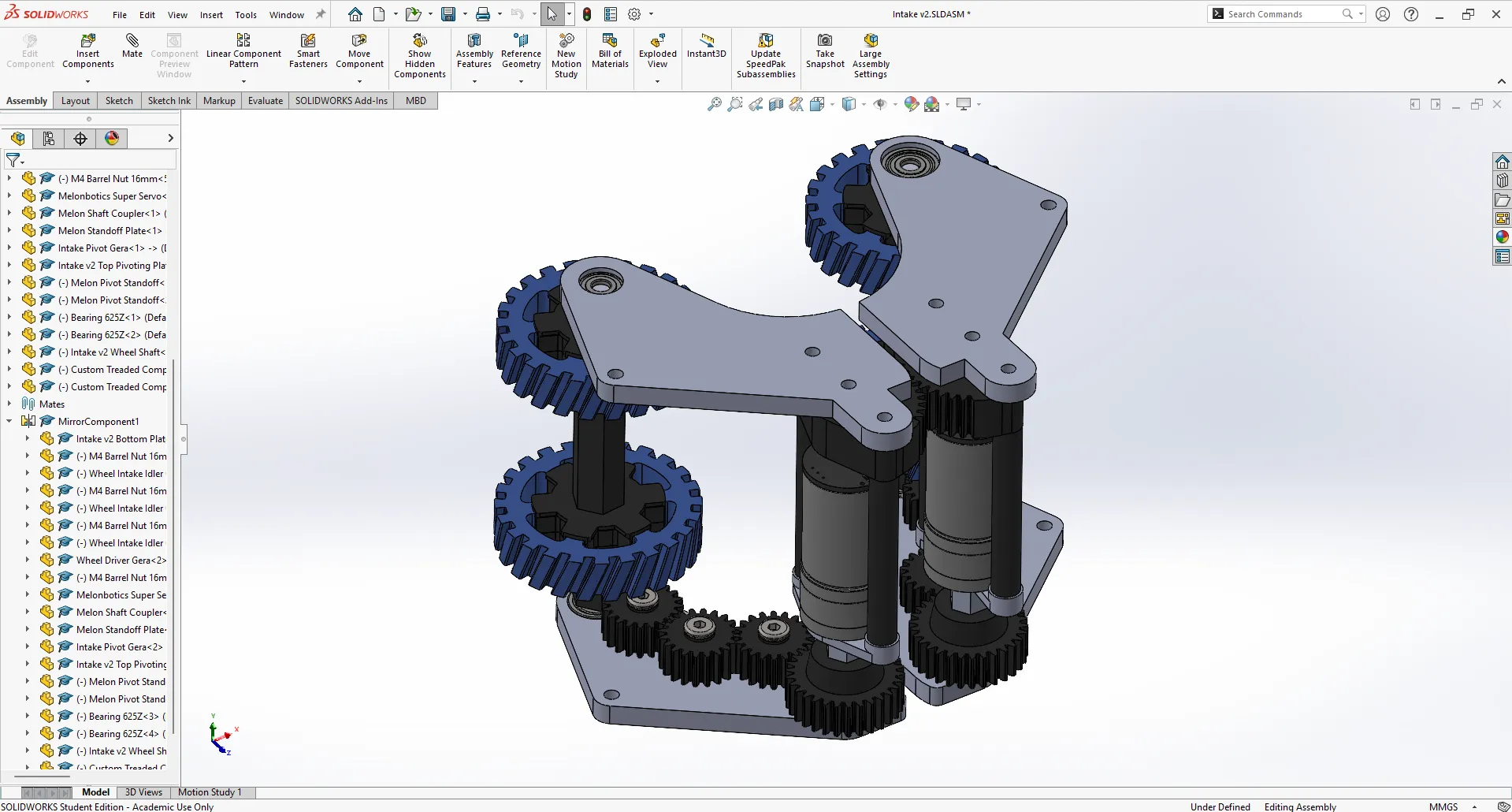
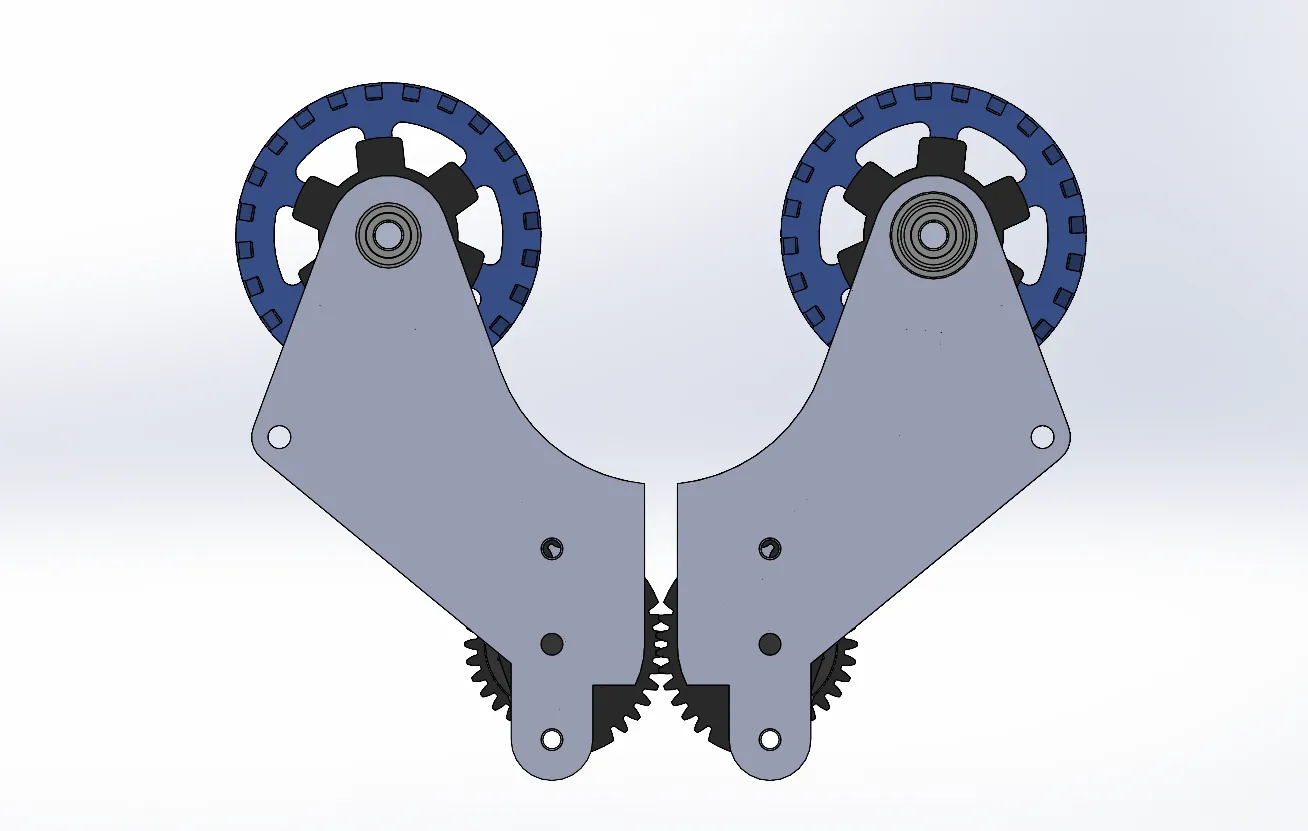
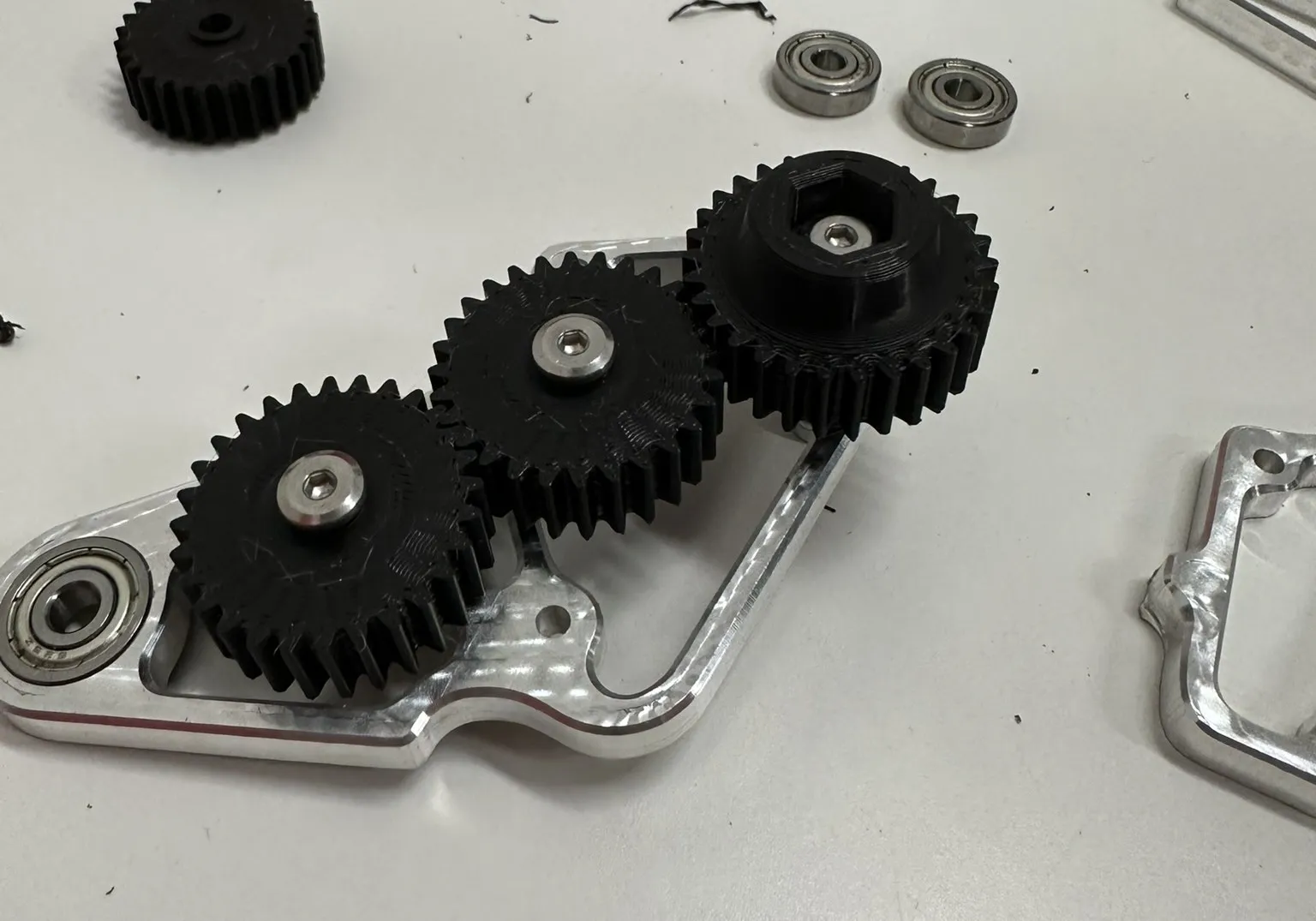
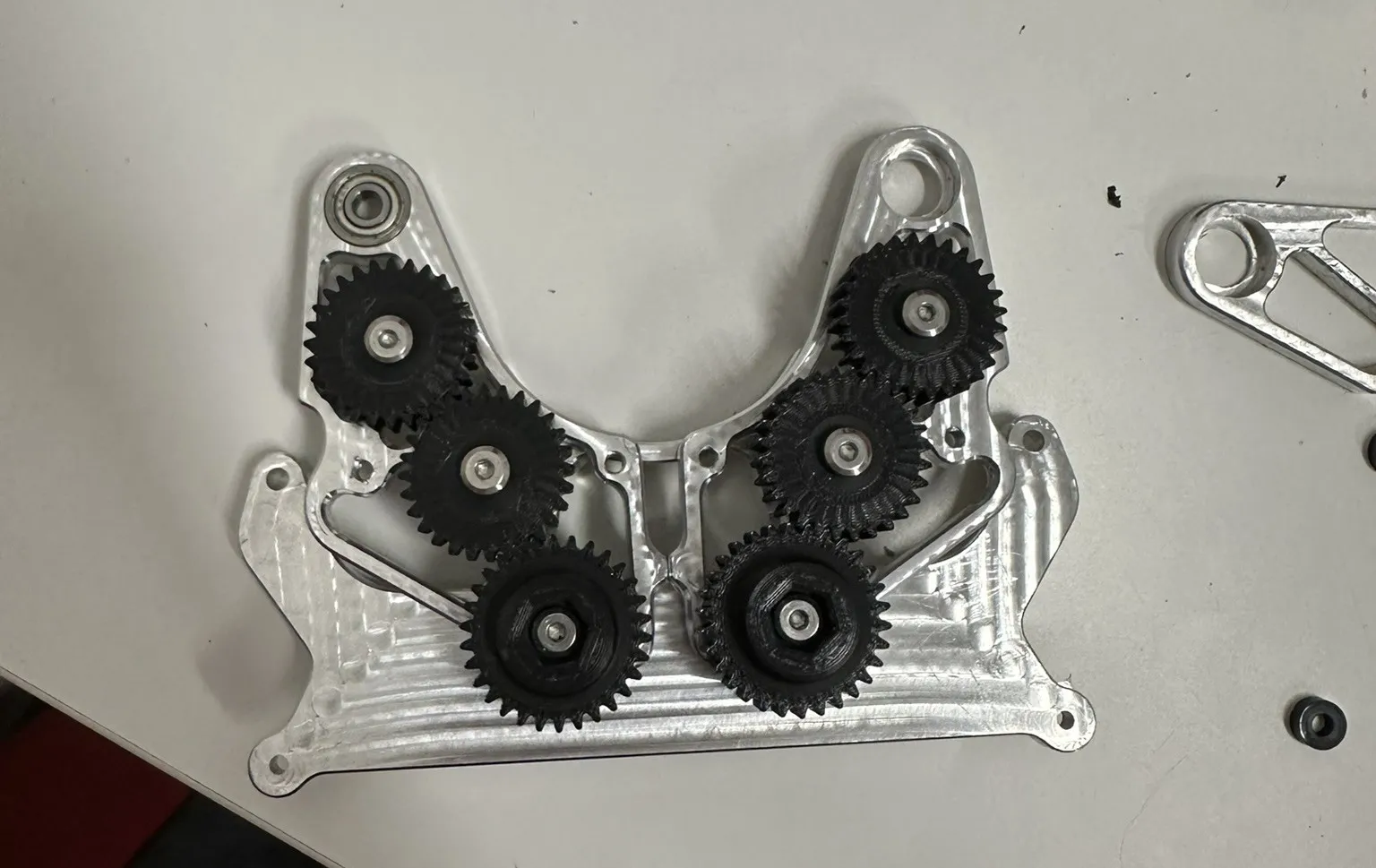
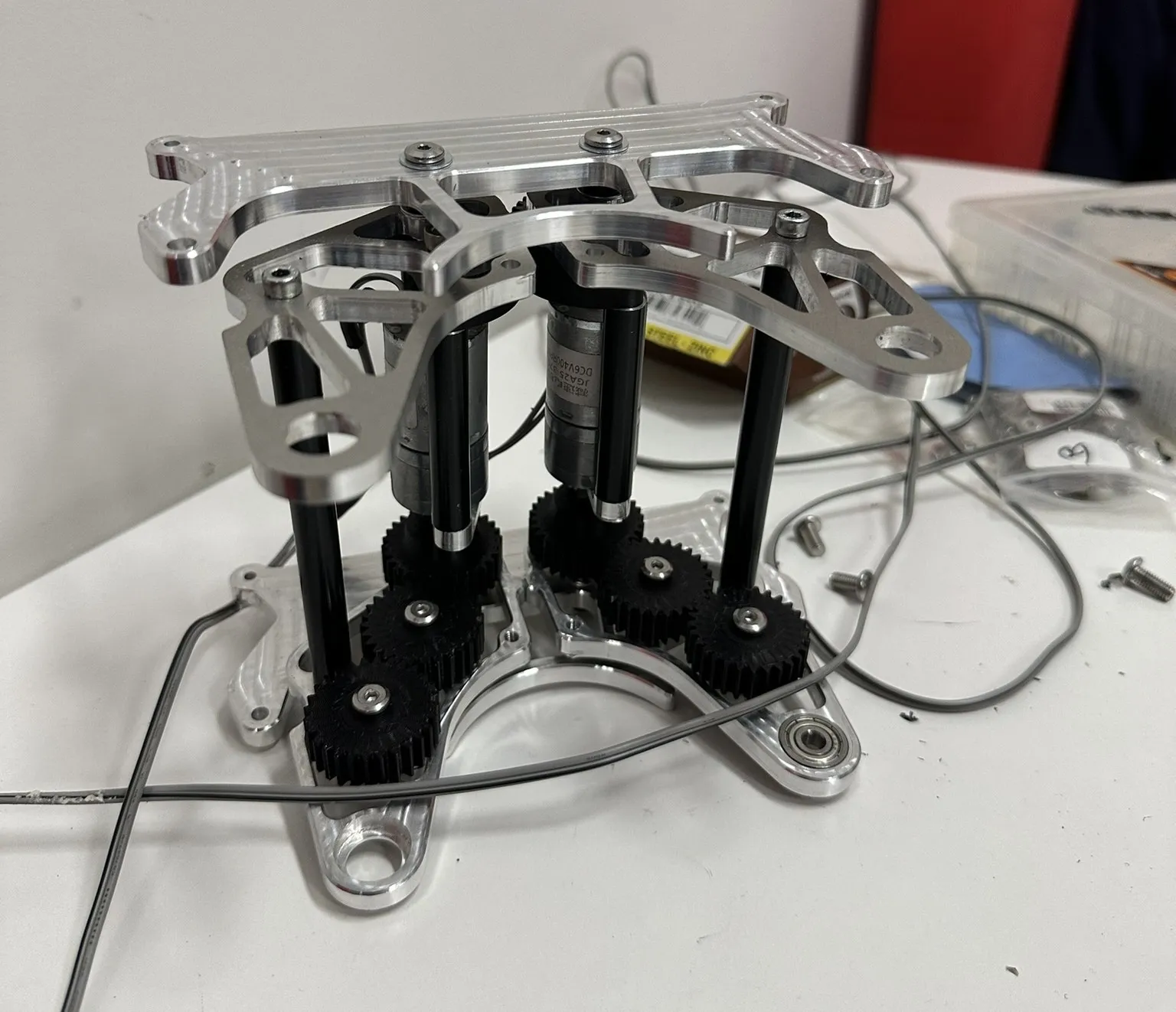
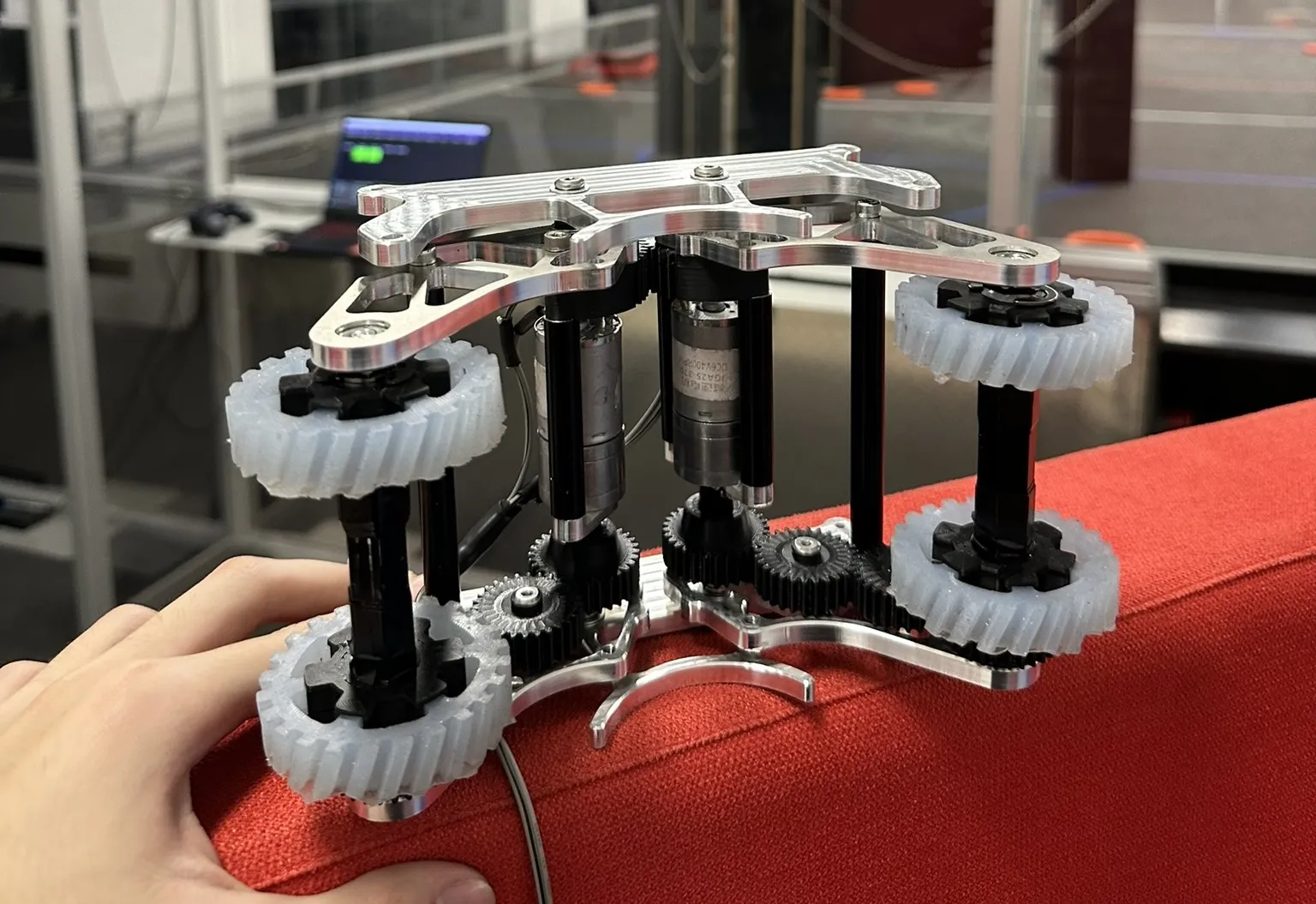
The retrieval task needed a mechanism that could capture the PVC pipe from the pool floor, grip it without dropping it, and release it without tipping it over. The first intake used a motor sticking out the top and fixed wheel shafts. V2 moved the motor drive into a geartrain and let the whole intake pivot the shafts apart, giving the custom wheels compliance around the pipe.
- Made custom compliant wheels to grip the PVC fuel rod
- Iterated from a fixed-shaft V1 intake into a pivoting V2 intake
- Used a geartrain and opposed wheel pairs to pull the pipe into the mechanism
- Machined the intake plates and assembled the drivetrain, bearings, standoffs, and wheels
Final ROV package
The final package brought the vehicle frame, ballast strategy, buoyancy, propulsion, and intake into one ROV for the pool-floor retrieval challenge.